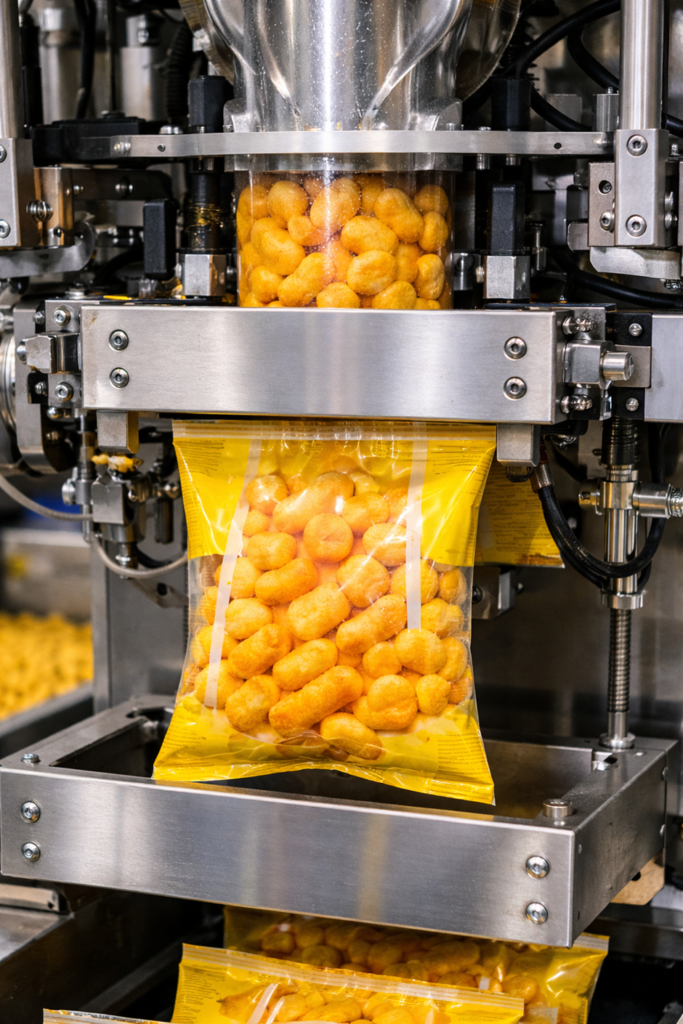
Manufacturing plants rarely struggle with production capability. Most facilities can produce goods at impressive speed. The real challenge often appears at the final stage of the process, where products must be packaged, labeled, and prepared for shipment without interrupting production flow. When packaging equipment cannot match the pace or handling requirements of the production line, delays begin to appear. This is where specialized machinery becomes valuable.
Many manufacturers eventually turn to a custom packaging machine designed specifically for the dimensions, speed, and handling requirements of their products. Instead of forcing products to fit standard equipment, custom-built packaging systems allow production lines to operate without unnecessary compromises.
When Standard Packaging Machines Reach Their Limits
Off-the-shelf packaging equipment works well for common product shapes and moderate production volumes. However, not all manufacturing operations produce items that fit neatly into standard packaging formats.
Common issues arise when:
- Products have unusual shapes or sizes
- Production lines operate at higher speeds than standard machines support
- Packaging materials require special sealing or handling methods
- Multiple product variations must be packaged on the same line
In these cases, manufacturers often attempt temporary workarounds such as slowing production or adding manual labor. While these solutions keep operations moving, they reduce efficiency and increase operational costs.
Custom machinery addresses these limitations by adapting the packaging process to the product rather than the other way around.
Designing Packaging Systems Around the Product
A custom packaging machine begins with a detailed understanding of the product being packaged. Engineers examine factors such as shape, weight, fragility, and packaging material before designing the machine layout.
Product handling systems are then built to guide items smoothly from the production line into the packaging process. Conveyors, alignment devices, and feeding mechanisms are designed to match product characteristics.
Because the machine is tailored to the product, the packaging process becomes more predictable. Items enter the system correctly oriented, move through filling or sealing stages without disruption, and exit as consistent finished packages.
Eliminating Production Bottlenecks
Packaging equipment often determines the maximum output of a production line. If packaging runs slower than manufacturing equipment, finished products accumulate and production must slow down.
Custom packaging machinery removes this constraint by aligning packaging speed with production capacity. Machines can be designed to operate at the exact pace required by the facility.
This synchronization improves workflow across the entire line. Products move steadily from processing to packaging without delays or manual intervention.
Handling Complex Packaging Materials
Modern packaging uses a wide range of materials including flexible films, laminated pouches, rigid containers, and protective wrapping systems. Some materials require precise temperature control, while others demand specific pressure or sealing techniques.
Custom machinery allows manufacturers to design equipment specifically for these materials. Sealing components, cutting mechanisms, and film handling systems can be optimized to ensure packaging integrity.
This level of control becomes especially important in industries where packaging protects product freshness, safety, or stability.
Supporting Product Variety Without Constant Machine Replacement
Manufacturers frequently introduce new product variations. Different sizes, package weights, or packaging styles can complicate production planning when using fixed-design machinery.
Custom packaging machines often include adjustable components that allow the system to handle multiple product configurations. Changeover systems can be designed to reduce downtime when switching between products.
Rather than replacing equipment for every new product line, manufacturers gain flexibility within a single packaging platform.
Improving Accuracy and Consistency
Packaging errors create unnecessary waste and disrupt distribution channels. Underfilled packages, damaged seals, or incorrect labeling can lead to rejected shipments and costly recalls.
Custom packaging machinery helps reduce these risks by controlling each step of the packaging cycle. Sensors monitor product position, fill levels, and sealing conditions. When the machine is built around the product’s exact requirements, consistency becomes easier to maintain.
Reliable packaging also improves downstream logistics. Uniform packages stack properly on pallets, move smoothly through warehouse systems, and maintain their condition during transport.
Reducing Manual Handling in Packaging Operations
Manual packaging may work for small production runs, but it becomes inefficient as output increases. Human handling slows the packaging process and introduces variability.
Custom machinery replaces repetitive manual tasks with automated movement. Products move directly from the production line into packaging systems without additional handling steps.
Reducing manual work improves workplace safety while allowing employees to focus on monitoring and quality control rather than repetitive packing tasks.
Integration with Automated Production Lines
Modern factories rely on interconnected equipment rather than isolated machines. Packaging systems must communicate with upstream production equipment and downstream logistics systems.
Custom packaging machines can be designed to integrate with existing automation infrastructure. Sensors and control systems coordinate product flow, machine speed, and packaging cycles.
This integration allows packaging operations to respond automatically to changes in production speed or product supply.
Long-Term Efficiency in Manufacturing Operations
Although custom machinery requires greater planning during installation, the long-term operational benefits often outweigh the initial investment.
Manufacturers typically see improvements such as:
- Faster packaging throughput
- Lower product damage rates
- Reduced packaging material waste
- Fewer production interruptions
These improvements contribute directly to more stable production output and lower operational costs.
Why Custom Packaging Systems Continue to Grow in Use
Manufacturing is becoming increasingly specialized. Products vary widely in shape, packaging style, and handling requirements. Standard equipment cannot always accommodate these differences without sacrificing efficiency.
Custom packaging machinery provides a way for manufacturers to align packaging operations with their unique production conditions. By adapting machine design to product characteristics and production speed, companies gain a packaging process that works with the factory rather than against it.
As production volumes grow and supply chains demand consistent packaging quality, the ability to design machinery around specific manufacturing requirements continues to offer a clear operational advantage.